



You are currently viewing Ultimate Guide To Kenya: What You Need to Know

Ultimate Guide To Kenya: What You Need to Know

Kenya at a Glance

Travel DetailKenya
CapitalNairobi
Best known forWildlife, safaris, beaches, culture, and landscapes
CurrencyKenyan Shilling (KES)
Official languagesSwahili and English
Main airportJomo Kenyatta International Airport
Famous wildlife areasMaasai Mara, Amboseli, Tsavo
Popular beach destinationsDiani Beach, Watamu, Malindi, Mombasa
Mountain adventureMount Kenya
Popular foodNyama choma, ugali, sukuma wiki, chapati

Introduction

What if one unforgettable trip could take you from the roar of lions on the African savannah to the gentle waves of the Indian Ocean? Kenya is more than world-famous safaris. It is a country filled with breathtaking landscapes, rich culture, delicious food, beautiful beaches, and unforgettable adventures.

Picture yourself watching elephants cross the golden plains of the Maasai Mara in the morning, experiencing vibrant Kenyan culture in the afternoon, and relaxing beside the warm waters of the coast as the sun sets. Every part of Kenya offers something new to discover.

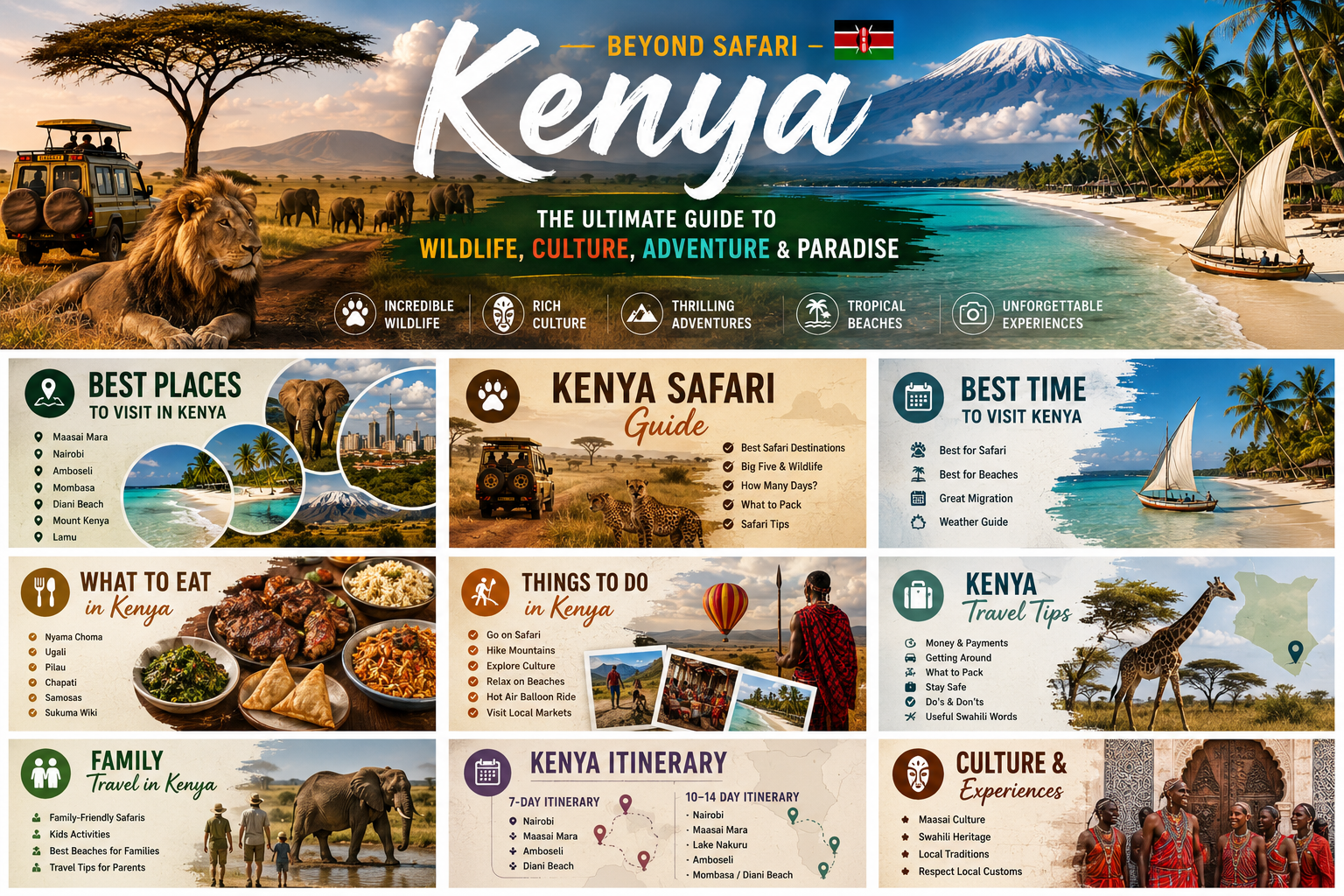
In this Kenya travel guide, you’ll discover the best places to visit in Kenya, top things to do, safari experiences, local foods, beautiful beaches, family-friendly attractions, the best time to visit, and practical travel tips to help you plan an amazing Kenyan adventure.

The Ultimate Guide to Wildlife, Culture, Adventure & Paradise

Why Kenya Should Be on Your Travel List

Kenya offers a mix of experiences that can suit almost every type of traveler. Wildlife lovers can explore national parks and reserves, while adventure seekers can hike mountains, visit forests, or enjoy exciting outdoor activities. If you prefer a slower trip, Kenya’s coastline offers peaceful beaches, warm waters, and charming coastal towns.

One of the country’s greatest strengths is its variety. You can move from busy city life in Nairobi to quiet landscapes, traditional villages, mountain regions, and coastal communities. Each area has its own character, making it easy to create a trip that matches your interests and travel style.

What Makes Kenya Special?

  • 🦁 World-class wildlife – See lions, elephants, giraffes, cheetahs, rhinos, and many other animals in their natural habitats.

  • 🌍 Diverse landscapes – Explore savannahs, mountains, forests, lakes, valleys, and tropical coastline.

  • 🏔️ Outdoor adventures – Hike, cycle, explore nature, or take on the challenge of Mount Kenya.

  • 🥘 Local flavors – Try Kenyan favorites such as nyama choma, ugali, sukuma wiki, and coastal dishes.

  • 🥁 Rich cultures – Learn about Kenya’s many communities, traditions, crafts, music, and everyday life.

  • 🏖️ Beautiful beaches – Relax along the Indian Ocean at destinations such as Diani, Watamu, and Malindi.

  • 👨‍👩‍👧‍👦 Family-friendly experiences – Enjoy wildlife centers, nature parks, beaches, and educational attractions suitable for different ages.

Kenya Beyond Safari Adventures 1024x683

Beyond the Famous Destinations

Kenya has many other places worth adding to your itinerary. Depending on your interests and available time, consider exploring Lake Naivasha, Lake Nakuru, Watamu, Malindi, Samburu, Lamu, Hell’s Gate National Park, and the Great Rift Valley.

The best itinerary does not have to include every famous destination. Instead, choose places that work well together and give you enough time to enjoy each experience without rushing from one location to another.

What to Do in Kenya

There is no shortage of things to do in Kenya.

Sometimes the best travel memories come from doing less.

A trip to Kenya can be as active or relaxed as you want. Start with a safari, then add cultural experiences, outdoor adventures, food tours, or a few days on the coast.

Top Things to Do

  • 🦁Go on a wildlife safari.

  • 🐘 Watch elephants beneath the peaks of Mount Kilimanjaro.

  • Experience the landscapes of the Great Rift Valley.

🌿 Explore famous national parks and nature reserves.

  • 🏔️🏔️ Discover and hike in the Mount Kenya region.

  • 🥁 Visit local markets and cultural attractions.

  • 🥁 Learn about Kenyan and Swahili cultures.

  • 🥁Learn about traditional Kenyan communities.

  • 🍛 Try authentic Kenyan food.

  • 🏖️ Relax on the beaches of the Indian Ocean.

  • Explore historic Mombasa and Lamu.

  • 🌊 Enjoy snorkeling, diving, or other coastal activities.

  • Take a guided nature walk where available.

  • 📸Photograph Kenya’s spectacular landscapes and wildlife.

  • 🦒 Search for wildlife in the Maasai Mara.

  • 🌅 Watch the sunrise or sunset.

  • 👨‍👩‍👧‍👦 Enjoy experiences suitable for families.

Beyond Safari Kenyas Ultimate Guide 1024x576

Kenyan Food You Should Try

Food is an important part of experiencing Kenya. Local meals are often simple, filling, and full of flavor, with influences from different communities and regions.

Must-Try Kenyan Foods

  • 🥩****Nyama choma – Grilled meat, often enjoyed with friends and family.

  • **🍛 **Ugali – A popular maize-based staple served with many meals, such as vegetables, meat, fish, or stew.

  • **🥬 **Sukuma wiki – Cooked leafy greens commonly served alongside other dishes.

  • **🫓 **Chapati – Soft, layered flatbread that pairs well with savory meals.

  • **🍚 **Pilau – Spiced rice with East African influences, especially popular along the coast.

  • Samaki – Fish dishes that are particularly popular in coastal areas.

  • Mandazi – A lightly sweet fried bread often enjoyed as a snack.

  • 🥟 Samosas: Crispy samosas are a popular snack and can be filled with meat or vegetables. 

For a more memorable food experience, try local restaurants and markets rather than limiting yourself to international hotel menus.

Food tip:** Ask locals what they recommend. Sometimes a small local restaurant can give you a more memorable meal than a fancy tourist restaurant.

Experience Kenyan Culture

Kenya is home to many different communities, each with its own traditions, languages, food, music, clothing, and customs. Cultural experiences can add a deeper meaning to a trip because they allow you to learn about the people and traditions behind the places you visit.

When visiting communities or cultural attractions, choose responsible experiences that respect local people and avoid treating traditions simply as entertainment. Ask before taking photographs, listen to local guides, and support locally owned businesses where possible.

Maasai culture is well known around the world, while the Kenyan coast has a strong Swahili cultural heritage.

Lamu is especially important for understanding Swahili history. UNESCO describes Lamu Old Town as a major center of Islamic and Swahili cultural learning.

Useful Swahili words

  • Jambo — Hello

  • Asante — Thank you

  • Karibu — Welcome

  • Tafadhali — Please

Kenya Beyond Safari Travel Guide 1024x683

Experience Kenyan Culture

Kenya is home to many different communities, each with its own traditions, languages, food, music, clothing, and customs. Cultural experiences can add a deeper meaning to a trip because they allow you to learn about the people and traditions behind the places you visit.

When visiting communities or cultural attractions, choose responsible experiences that respect local people and avoid treating traditions simply as entertainment. Ask before taking photographs, listen to local guides, and support locally owned businesses where possible.

Maasai culture is well known around the world, while the Kenyan coast has a strong Swahili cultural heritage.

Lamu is especially important for understanding Swahili history. UNESCO describes Lamu Old Town as a major center of Islamic and Swahili cultural learning.

Useful Swahili words

  • Jambo — Hello

  • Asante — Thank you

  • Karibu — Welcome

  • Tafadhali — Please

Kenya for Families

Kenya can be an exciting destination for families when the itinerary is planned around everyone’s needs. Wildlife experiences can be educational and memorable for children, while beaches provide plenty of time to relax between activities.

Family-Friendly Ideas

  • Visit wildlife conservation centers.

  • Take age-appropriate safari drives.

  • Spend time on family-friendly beaches.

  • Explore Nairobi’s museums and attractions.

  • Enjoy nature walks with experienced guides.

  • Visit coastal cultural and historical sites.

  • Choose accommodations with family facilities.

For younger children, avoid creating an itinerary with long travel days every day. A slower schedule can make the trip more comfortable for the whole family.

Plan Your Kenya Adventure 1024x683

Kenya Travel Tips

A little preparation can make your trip much easier. Kenya is a large country, so travel times between destinations can be significant. Plan your route before booking activities and leave enough time to rest.

Helpful Tips

  • Carry some Kenyan shillings for smaller purchases.

  • Keep important documents and valuables secure.

  • Follow your safari guide’s instructions around wildlife.

  • Drink safe, treated, or bottled water when appropriate.

  • Pack lightweight clothing along with a warmer layer for cooler mornings and evenings.

  • Bring comfortable walking shoes.

  • Use sunscreen, sunglasses, and insect protection.

  • Book popular safari lodges and tours in advance during busy periods.

  • Respect local customs and always ask before photographing people.

  • Consider travel insurance for your trip.

Kenya Do's & Don'ts

Do

  • Respect local communities and traditions.

  • Follow wildlife rules and keep a safe distance from animals.

  • Support local guides, restaurants, artists, and businesses.

  • Learn a few simple Swahili words.

  • Keep your surroundings clean.

  • Plan your transport between major destinations in advance.

    • Keep a safe distance from animals.

    • Ask before taking photographs.

    • Protect nature.

    • Support local businesses.

    • Carry some useful travel essentials.

Don’t

  • Feed or approach wild animals.

  • Ignore instructions from safari guides.

  • Take photographs of people without permission.

  • Assume every part of Kenya has the same culture or customs.

  • Pack only beach clothes—some regions can be cool, especially at higher elevations.

  • Try to fit too many destinations into a short trip.

    • Expect wildlife to appear on schedule

The simple rule is: Respect the people, respect the animals, and respect the land.

Kenya Adventure Awaits 1024x683

Build Your Perfect Kenya Itinerary

The best Kenya itinerary depends on what you want from your journey. A first-time visitor might combine Nairobi, the Maasai Mara, and the coast, while an adventure traveler may prefer adding Mount Kenya or the Great Rift Valley.

If you have more time, you can create a longer route that combines wildlife, mountains, culture, and beaches. The key is to give yourself enough time to enjoy each destination rather than treating the trip like a checklist.

Whether your dream is a thrilling safari, a mountain adventure, a cultural journey, or a relaxing beach escape, Kenya gives you the freedom to build a trip around your own interests

Best Time to Visit Kenya

Kenya is a year-round destination, but the best time to visit depends on what you want to experience. For most travelers, June to October is the best overall period because the weather is generally dry, wildlife is easier to spot, and conditions are excellent for safari and outdoor activities. Kenya’s tourism board also highlights December to March as another popular dry and warm period. (Magical Kenya)

☀️ June to October — Best Overall

This is the ideal period for a Kenya safari, especially if wildlife is your main reason for visiting. The dry conditions make it easier to spot animals in areas such as the Maasai Mara, Amboseli, and Tsavo. July to October is also a popular period for visiting the Maasai Mara during the Great Migration.

Best for:

  • 🦁 Wildlife safaris

  • 🐘 Big Five viewing

  • 📸 Wildlife photography

  • 🦓 Great Migration experiences

  • 🏔️ Hiking and outdoor adventures

  • 🌿 Exploring national parks

🌴 December to March — Best for Safari & Beaches

December through March is another excellent period, particularly if you want to combine wildlife and the Kenyan coast. The coast generally has its best sunshine and fairer weather during December to March, while January and February are relatively dry in Nairobi and the central highlands. (Magical Kenya)

Best for:

  • 🏖️ Diani Beach and the Kenyan coast

  • 🦁 Safari

  • 🌞 Warm, sunny weather

  • 🏙️ Nairobi

  • 🏔️ Mount Kenya region

  • 👨‍👩‍👧‍👦 Family holidays

🌧️ March to May — Long Rainy Season

March to May brings Kenya’s long rains, with April generally being the wettest month in Nairobi. Safari travel is still possible, and the countryside can become beautifully green, but heavy rainfall may make some rural roads and outdoor activities more difficult.

This can be a good choice if you prefer greener landscapes and potentially quieter travel, but weather conditions can be less predictable.

🌦️ October to December — Short Rains

The short rains usually occur from October to December. Rain is generally lighter and more unpredictable than during the long-rain season, with sunny periods between showers. Kenya can still be rewarding during these months, particularly for travelers who want to experience greener landscapes.

📅 Kenya Travel Calendar

MonthsWeatherBest For
January–February☀️ Warm & relatively drySafari, beaches, Nairobi, Mount Kenya
March–May🌧️ Long rainsGreen landscapes, fewer crowds
June–July☀️ Dry & coolerSafari, hiking, wildlife
August–September☀️ DrySafari, Great Migration, wildlife photography
October🌤️ Mostly dry/transitionSafari, wildlife, outdoor activities
November–December🌦️ Short rainsGreen landscapes, culture,st safari, coa

⭐ My Recommendation

For your first trip to Kenya, aim for June to October. This gives you some of the best conditions for combining a Maasai Mara safari, Nairobi, Amboseli or Tsavo, and a relaxing beach stay. If beaches are a major priority, December to March is another excellent choice. (Magical Kenya)

Travel tip: There is no single “perfect” month for every part of Kenya. The country’s climate varies by region and altitude, so choose your travel dates based on whether your priority is safari, beaches, hiking, culture, or a combination of experiences

How to Get Around Kenya

Getting around Kenya is relatively easy, but the best transport option depends on your destination, budget, and how much time you have. For a first trip, a combination of domestic flights, safari vehicles, trains, private transfers, and local transport usually works best.

✈️ 1. Domestic Flights — Best for Long Distances

Flying is the fastest way to travel between major destinations, especially when you have limited time.

Nairobi is the main transportation hub, with flights connecting to destinations such as Mombasa, Malindi, Diani, Kisumu, and safari areas. Some safari destinations have small airstrips close to lodges and camps, making flights particularly convenient for reaching remote parks.

Best for:

  • Long-distance travel

  • Safari destinations

  • Travelers with limited time

  • Combining Nairobi, safari, and the coast

Tip: If you’re planning a safari, check whether your lodge or camp has an airstrip nearby. A short flight can save many hours of road travel.


🚆 2. Train — Best for Nairobi to Mombasa

The Madaraka Express is one of the easiest ways to travel between Nairobi and Mombasa. Kenya Railways currently operates Inter-County, Express, and Night services on the route, with stops including Voi, Mtito Andei, Kibwezi, Emali, and Athi River. (Kenya Railways)

The journey is comfortable and gives you the chance to see parts of Kenya’s landscape without dealing with a long road trip.

Best for:

  • Nairobi → Mombasa

  • Travelers who prefer rail travel

  • Families

  • Travelers who want a comfortable alternative to driving

Travel tip: Kenya Railways recommends arriving at the station at least 60 minutes before departure for check-in and security procedures. (Kenya Railways)


🚙 3. Safari Vehicles — Best for National Parks

For a safari, a 4×4 safari vehicle with a professional driver-guide is usually the best option. Your guide knows the park roads, wildlife areas, and safety rules and can help you find animals while explaining what you see.

This is particularly useful in places such as the Maasai Mara, Amboseli, Tsavo, and Samburu.

Best for:

  • Game drives

  • National parks and reserves

  • Wildlife photography

  • Families and first-time safari travelers

Tip: Avoid trying to plan a safari entirely around ordinary public transport. Safari parks are large, and access to wildlife areas is much easier with an experienced guide.


🚐 4. Private Transfers & Taxis

Private cars and transfers are useful when traveling between airports, hotels, train stations, beaches, and nearby attractions.

For example, you might use a private transfer to travel from Mombasa to Diani Beach or from an airport to your hotel.

For short city journeys, taxis and app-based ride services can also be convenient, particularly in Nairobi and other larger towns.

Best for:

  • Airport transfers

  • Hotel transfers

  • Families with luggage

  • Short journeys

  • Travelers who prefer convenience

Tip: Agree on the price before using a taxi when a meter or app-based fare is not being used.


🚌 5. Matatus & Buses — Best for Budget Travel

Matatus are shared minibuses widely used by locals and can be an inexpensive way to travel around cities and between towns. Long-distance buses also connect many parts of Kenya.

They can be useful if you’re traveling on a budget, but they may be less comfortable and less predictable than private transportation.

Best for:

  • Budget travelers

  • Shorter journeys

  • Traveling between towns

  • Experiencing everyday local transportation

Tip: If you’re unfamiliar with the area, ask your hotel or a trusted local where to board and which route to take.


🚗 6. Renting a Car

You can rent a car in Kenya, particularly in major cities and tourist areas. A rental car gives you more freedom to explore destinations at your own pace.

However, driving in Kenya is not the same as driving on a typical European holiday. Traffic, road conditions, navigation, and rural routes can make some journeys challenging. For remote areas and safari parks, a suitable 4×4 and local knowledge can be important.

Best for:

  • Experienced drivers

  • Flexible road trips

  • Travelers visiting several destinations independently

Tip: If you are unfamiliar with Kenyan roads, consider hiring a car with a driver rather than driving yourself.


🚤 7. Boats & Local Water Transport

Along the coast, boats can be part of the travel experience rather than simply a way to get from one place to another. You can use boats for excursions, snorkeling trips, island visits, and traditional dhow experiences.

In places such as Lamu, boats are particularly important because the historic island environment is designed around pedestrian and water-based travel.

Best for:

  • Coastal trips

  • Island excursions

  • Snorkeling and diving

  • Lamu and other coastal experiences


🚦 Which Transport Should You Choose?

TransportBest ForComfortBudget
✈️ Domestic flightLong distances & safari areas⭐⭐⭐⭐⭐$$$
🚆 Madaraka ExpressNairobi–Mombasa⭐⭐⭐⭐⭐$$
🚙 Safari vehicleNational parks⭐⭐⭐⭐⭐$$$
🚗 Private car/driverFlexible travel⭐⭐⭐⭐⭐$$$
🚌 BusLonger budget journeys⭐⭐⭐$
🚐 MatatuLocal & budget travel⭐⭐$
🚤 BoatCoastal & island travel⭐⭐⭐⭐$$

💡 My Recommended Way to Travel Around Kenya

For a first-time Kenya trip, I recommend mixing different types of transport instead of relying on just one.

A good itinerary could look like this:

Nairobi → Maasai Mara: ✈️ Flight or 🚙 safari vehicle
Maasai Mara → Nairobi: ✈️ Flight or 🚙 safari vehicle
Nairobi → Mombasa: 🚆 Madaraka Express
Mombasa → Diani Beach: 🚗 Private transfer
Diani/Lamu: 🚤 Boat where appropriate + local transfers

This approach saves time on long journeys while still allowing you to experience Kenya’s landscapes and local transport.

Important: Transport schedules, routes, and fares can change, so check the operator shortly before traveling. For the current Madaraka Express timetable and booking information, Kenya Railways provides the official schedules and ticketing information.

Frequently Asked Questions About Kenya

1. What is the best time to visit Kenya?

The best overall time to visit Kenya is generally June to October, when the weather is mostly dry and conditions are excellent for wildlife viewing and outdoor activities. January to February is another good period, especially for safari and beach holidays.

2. How many days do you need in Kenya?

For a first trip, 7 to 14 days is a good amount of time. A week can cover Nairobi, a safari, and the coast, while two weeks gives you more time to explore places such as Amboseli, Tsavo, Mount Kenya, or Lamu.

3. Is Kenya good for a family holiday?

Yes. Kenya can be an excellent family destination. Families can enjoy safari drives, wildlife conservation centers, beaches, cultural attractions, and outdoor activities. Choose a relaxed itinerary and family-friendly accommodation.

4. What are the best places to visit in Kenya?

Some of the best places include Maasai Mara, Amboseli National Park, Nairobi, Mount Kenya, Mombasa, Diani Beach, Tsavo, and Lamu. The best choices depend on whether you prefer wildlife, beaches, culture, hiking, or city experiences.

5. Is Kenya safe for tourists?

Many travelers visit Kenya safely every year. However, visitors should take normal travel precautions, follow local advice, keep valuables secure, and pay attention to guidance from safari guides and accommodation staff. Check current official travel advice before your trip.

6. How do you get around Kenya?

You can travel around Kenya by domestic flights, train, safari vehicles, buses, matatus, private transfers, taxis, and rental cars. Flights are useful for long distances, while safari vehicles are usually the most practical option inside national parks and reserves.

7. What currency is used in Kenya?

Kenya uses the Kenyan shilling (KES). Cards are accepted in many hotels, restaurants, and larger businesses, but it is useful to carry some local currency for smaller purchases and places where card payments may not be available.

8. What language is spoken in Kenya?

Swahili and English are the country’s official languages. English is widely used in tourism, while Swahili is commonly spoken in everyday life. Learning a few Swahili words such as asante (thank you) and karibu (welcome) can make your trip more enjoyable.

9. What food should you try in Kenya?

Some popular foods to try include nyama choma, ugali, sukuma wiki, chapati, pilau, samaki, mandazi, and samosas. Coastal areas such as Mombasa and Lamu are especially known for flavorful Swahili and seafood dishes.

10. Can you combine a safari with a beach holiday in Kenya?

Absolutely. A Kenya safari and beach holiday is one of the best ways to experience different sides of the country. You could combine the Maasai Mara or Amboseli with Diani Beach, Mombasa, Watamu, or Lamu.

11. Is Kenya expensive to visit?

Kenya can suit different budgets. Costs depend on your accommodation, safari style, transportation, activities, and travel season. Luxury safari lodges can be expensive, while budget hotels, local restaurants, and public transportation can help reduce costs.

12. What should I pack for a trip to Kenya?

Pack lightweight, comfortable clothing, comfortable walking shoes, sunscreen, sunglasses, insect protection, and a reusable water bottle. Bring a light jacket or warm layer because some areas, especially higher-altitude destinations, can be cool in the morning and evening.

13. Do I need a guide for a Kenya safari?

A professional safari guide is highly recommended. Guides know the parks, understand wildlife behavior, help with navigation, and can make the experience safer and more informative.

14. Can I visit Kenya during the rainy season?

Yes. Kenya can still be visited during the rainy seasons. The March–May long rains and October–December short rains can bring greener landscapes and fewer tourists in some areas. However, rain can make some roads and outdoor activities more challenging.

15. What makes Kenya different from other African destinations?

Kenya stands out because of its combination of world-class wildlife, diverse landscapes, rich cultures, mountains, cities, and Indian Ocean beaches. You can experience a safari, explore Swahili heritage, hike in the mountains, and relax on a tropical beach during the same trip.

16. Is Kenya worth visiting?

Yes! Kenya offers a rare mix of wildlife, adventure, culture, mountains, cities, food, and tropical beaches, making it an exciting destination for many types of travelers.

17. What animals can you see in Kenya?

Depending on where you go, you may see lions, elephants, leopards, rhinos, buffalo, giraffes, zebras, cheetahs, hippos, and many bird species.

18. Is Kenya good for a safari?

Yes. Kenya is one of Africa’s best-known safari destinations. The Maasai Mara and Amboseli National Park are especially popular for wildlife viewing.

  1. What is Kenya famous for?

    Kenya is especially famous for its wildlife, safaris, the Maasai Mara, elephants, diverse landscapes, Mount Kenya, beautiful beaches, and rich cultural traditions

  2. Is Kenya worth visiting?

    **Yes. Kenya is worth visiting for its wildlife, safaris, landscapes, cultures, mountains, food, and beautiful coastline

KENYA CONCLUTION 1024x683

Conclusion: Your Kenya Adventure Awaits

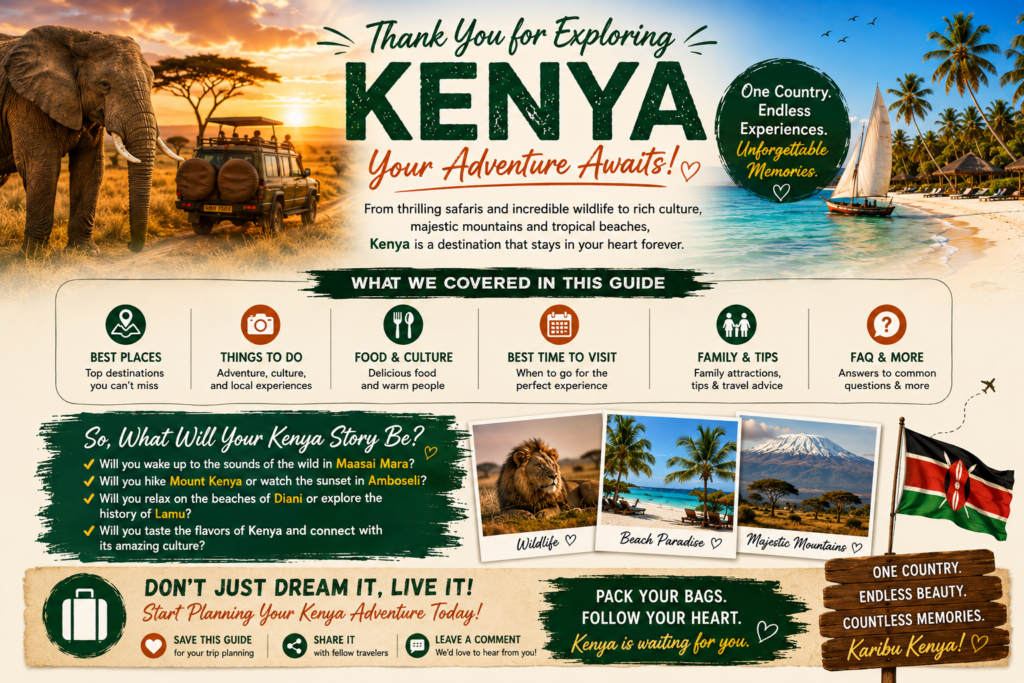
Kenya is a destination full of unforgettable experiences, from thrilling wildlife encounters and breathtaking landscapes to rich traditions, delicious food, and relaxing Indian Ocean beaches. Whether you are planning a safari, family holiday, cultural journey, or outdoor adventure, Kenya offers something for every traveler.

The adventure is waiting—now it’s your turn to experience Kenya for yourself. Start planning your journey, choose the destinations that inspire you most, and make memories that will last a lifetime.

  • Post category:Africa / Best Place to Visit
  • Reading time:19 mins read
  • Post last modified:August 31, 2026
  • Post author: